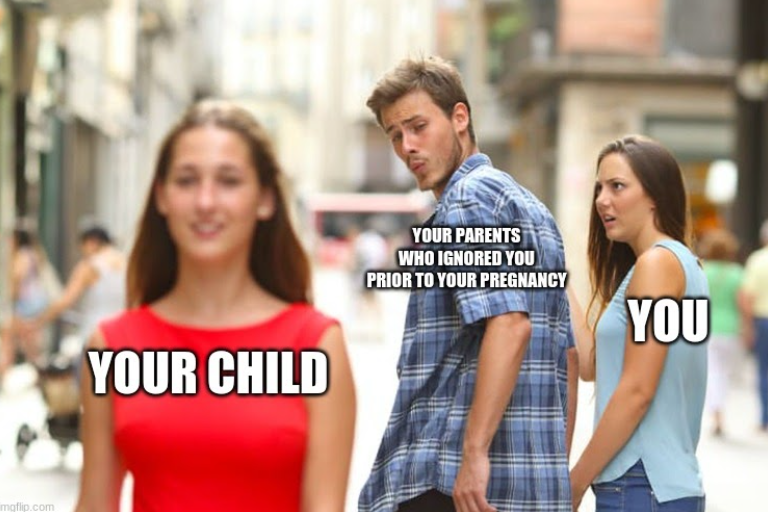
WIBTA for not apologizing to smothering in-laws?
TL;DR: This woman is having her first child with her husband. The husband’s parents have never really paid them any attention until they found out that their son and daughter in-law were going to have a child. So, the parents began involving themselves into much of their kids’ lives; Often giving their opinion about decisions that are not theirs to make and imposing themselves upon their kids’ lives. It has gotten to the point that both the husband and wife have told the parents to back off, yet they do not and continue to impose their wishes and opinions on the lives of their kids. One day, the newly pregnant wife was minding her own business and the parents showed up and began berating the wife. She couldn’t take it any more and lost her temper, blowing up on the parents and telling them that they are not welcome around her, her family, and her house. The parents ended up leaving hesitantly and other family members from the husband’s family are demanding an apology from the wife. The husband thinks that she should not apologize and the wife is wondering if she is an a-hole for not apologizing.
In the above scenario, both the wife and the smothering in-laws have both failed to treat each other respectfully. The wife shouted for the in-laws to leave and the in-laws called the wife an “ungrateful bitch” and were trying to control the wife’s entire pregnancy. While both are in the wrong, our advice for the wife stems from Buss’ moral philosophy based on mutual respect and treating others with dignity. Buss writes, “to treat someone ‘with respect’ is to treat her in a way that acknowledges her intrinsic value, or ‘dignity.’ This is a value she has no matter what her deeds and accomplishments may be; it is tied to what she is, not to what she has done” (797).
Though the husband’s parents acted in ways that irritate the wife, Buss advises that the wife should still treat them with dignity and respect because they still have intrinsic value, even though she might think their actions do not. The in-laws certainly treated the wife without dignity, but the wife’s response should be to apologize. When the wife snapped back at the in-laws she failed to acknowledge their dignity in that moment. It is for this reason that regardless of what the in-laws had done, and whether or not it was justified, the wife should apologize. Similarly for the in-laws, regardless of the wife’s actions, they too need to apologize. Our advice is to then have a calm discussion with the in-laws in which the wife apologizes for her yelling, and then facilitates a discussion about her and her husband’s needs and how they alone should make the decisions about their child in order to prevent future situations like this.
AITA for refusing to hug my cheating mum?
TL;DR: This individual found out that her mother was cheating on her dad with another man that she had met through a mutual friend. The mother has been sending explicit messages and photos back and forth with the other man without her father knowing. The individual confronted her mother and her mother promised that she would stop. Eventually the mother told the father but had omitted the truth about the types of messages being sent to the other man. A month passes and the individual finds that her mother is still sending messages, so the daughter confronts her again. The mother swears on her grandchildren that she will stop, but she does not stop. A week later, her mother asks for a hug, but the daughter cannot and has not forgiven her for manipulating her father and consistently lying, so she politely denies the hug from her mother. The mother then becomes angry and storms out of the room. The daughter doesn’t want a relationship with her cheating mother and has been informed from her father that her mother now hates her. The daughter is wondering if she is the a-hole for not wanting to hug her mother.
Buss’s main argument, in relation to Kant’s philosophy, demonstrates that morality is the result not merely of agreeableness, but in demonstrating respect and dignity for others. Just as we would want for ourselves, we too should show respect through societally agreed upon activities and events that quickly establish a mutual groundwork of human deference. Morality does not come from simply performing these actions but in genuinely conveying and meaning to show respect and caring of others, again, as we would expect for ourselves. In this particular situation, it is clear to see the mother is not respecting anyone in her family by continuing to flirt with another man. This can be seen from multiple perspectives and each view results in the same conclusion; the mother’s actions are both immoral and disrespectful to her family members as well as herself.
However, regarding the author of the post, in answering this question, “am I the asshole for not hugging my mother,” Kant and Buss would most likely agree that the daughter is also demonstrating immoral behavior. While her actions may be warranted due the mothers immoral behavior, the daughter is responsible for her own actions which she can justifiably choose, unlike her mother, to take the moral high ground. Personal emotions may prevent her from physically showing affection, withholding this affection will not solve her problems, only exacerbating them, demonstrated in the mothers tantrumatic response.
Although a less favorable path, the daughter should apologize and should try to come to a solution of talking with her mother rather than withholding affection as an incentive for her to stop cheating as this demonstrates very little respect or dignity. As Buss states, “human beings deserve to be treated with respect, that they are respectworthy, that is, that they have a dignity not shared by those whom one does not bother to treat with such deference and care” (Buss, 801). Whether or not the mother responds with moral actions is unpredictable but according to Buss and Kant, moral action dictates the daughter should own up to her mistake, openly voice her concerns, frustrations, issues with her mother, and eventually accept the mistake and person for who her mother is.