Mill’s Utilitarianism In Practice

Overview

Utilitarian Mill defends the idea that “actions are right in proportion as they tend to promote happiness, wrong as they tend to produce the reverse of happiness” (186). This is a subjective rather than an objective consequentialist framework: Mill does not say what the specific objects of happiness and pleasure are, simply that increasing them both in quantity and quality is the goal of morality. Mill thinks that desiring to promote happiness and minimize pain is a sufficient motivation to take good actions, in fact this is the first principle that he thinks we have made the grave error of not previously identifying. Once we have this, all more complex moral questions should fall into place.

One complication that emerges is the distinction between motivation and intention. Mill separates these as such: motivation is the “disposition—bent of character”, and intention is what the agent “wills to do” (196). This initially seems a bit counterintuitive; if someone takes actions that have beneficial consequences for the most number of people, how can their disposition of character still be bent towards immorality? In separating these two we end up with people deserving of their moral desert who have a much smaller sphere of influence than people with a large sphere that act in bad faith because of some secret benefit to themselves.

Utilitarianism has gotten a bad reputation from some naysayers who label utilitarians as heartless, focused on improper ends, and simply asks too much from people. Mill responds to the charge of ‘coldness’ by saying that those who hold to systems of virtue ethics are equally cold to those they feel have not developed their virtue effortfully and doubles down, saying that “in the long run the best proof of a good character is good actions; and [utilitarians] resolutely refuse to consider any mental disposition as good, of which the predominant tendency is to produce bad conduct” (197).

Mill confronts the accusation that utilitarianism sets too high of a standard, his response is that “no system of ethics requires that the sole motive of all we do shall be a feeling of duty,” (195) meaning that most people will have very few occasions to make decisions that have a massive impact on the happiness of society. Mill responds to the most popular objection, which asserts that utilitarianism’s end of ‘pleasure’ is not dignified enough for humans, by introducing a separation between high and low pleasures.

Prompt 1

“My boyfriend wants to follow me and live with me after he graduates from his university, but I’m not sure if I want to be responsible for changing his career trajectory and have him move to a new town. But at the same time I still want to be with him.”

The individual who asked this question left a fair amount of details open for interpretation. They hinge their moral issue on their own potential feelings of responsibility for the situation, which adds an interesting layer to the strictly utilitarian view of the argument. In order to do a purely utilitarian analysis, we would have to know with more certainty about what the poster’s boyfriend is giving up, and heading towards. If he was giving up his dream job, for example, that could have a large effect on the happiness balance required by Mill’s theory. Even if he wants to leave, and they both want to be with each other, he would be significantly reducing his own happiness, which would have to be considered. However, if there is greater potential for long-term happiness accumulation in a different field or place, it could be an easy decision from the utilitarian perspective.

The introduction of weighing the responsibility felt by the poster seems as though it increases the complexity of weighing the decision. For Mill, though, it seems as though this would not be a significant factor. He writes that the greatest happiness principle is designed to produce

existence exempt as far as possible from pain, and as rich as possible in enjoyments, both in point of quantity and quality; the test of quality, and the rule for measuring it against quantity, being the preference felt by those who, in their opportunities of experience, to which must be added their habits of self-consciousness and self-observation, are best furnished with the means of comparison. (Mill section 10)

Importantly, here, he points out that those who are ‘best furnished with the means of comparison,’ and are therefore able to make the most educated decision, should be the ones giving the most input when making decisions. Additionally, he emphasizes the importance of considering both quality and quantity of happiness. In this case, the poster’s boyfriend is considering reducing his quantity of happiness (temporarily, at least, if he has to find a new job or career) in exchange for an increase in the quality by getting to continue his relationship. Ultimately, if the poster is planning to move away regardless of his decision, the boyfriend is going to lose either his career or his girlfriend, so it seems as though it is up to him to weigh those out and decide which would reduce his happiness the least from the utilitarian perspective. However, the poster has an equal right to do that equation for herself – if she would be materially less happy if her boyfriend moved with her, she should express that.

Applying Mill’s Greatest Happiness Principle here does not produce a completely satisfying answer, because it ultimately dictates that the only people who can really judge the situation are those whose happiness is most directly affected by it. However, applying the utilitarian logic of maximizing happiness more generally does show that there will be potential decreases in happiness regardless of what happens, which should reduce the responsibility that the poster feels towards her boyfriend making the choice to come with her.

Prompt 2

Should I build a fence and refrain the neighbors from using the pool?

TLDR: The narrator had just moved into a pool and has a pool in their backyard. The neighbors had told the narrator that sometimes the old owner would let them use the pool, however the narrator said that she was uncomfortable with that and that they can use it occasionally. However, the neighbors’ kids abused the privilege all summer and she is now planning to put up a fence. The fence is within regulation and on the property line, however the neighbor suggested that she was depriving them of the pool and that she should put a gate between the yards, so it would be easier for the kids to come to her house.

In Mill’s perspective, he would be in favor of not putting up the fence. The owner at hand would be considered the agent. Mill says that “the happiness which forms the utilitarian standard of what is right in conduct, is not the agent’s own happiness, but that of all concerned. As between his own happiness and that of others, utilitarianism requires him to be as strictly impartial as a disinterested and benevolent spectator” (Mill 194). In other words, the agent’s happiness should not be prioritized, but instead their happiness should be alongside the happiness of the neighbors. It should be equal. When analyzing this prompt, we can go about it in two ways depending on whose happiness outweighs the other. In my opinion, Mill would say that the happiness of the kids and the neighbors is the maximization of happiness and therefore that outweighs the happiness of the owner.

Additionally, Mill argues for a distribution of wealth to those who are more disadvantaged than you are. For example, say you had $17 in your wallet. Mill believes that you are much richer than most people and therefore must give up those $17. For this specific prompt, Mill would see the pool in the same way as the money. This would mean that the owner would have to share the pool with the less fortunate (the neighbors). All things considered, Mill would be against the owner’s plan of refraining the neighbors from using the pool. However, the neighbors did point out the idea of putting a gate in the fence so that the kids can come though it to use the pool. I believe that this would be the best idea and Mill would agree as this gives the agent some happiness while also sharing her wealth and giving happiness to the neighbors.

Synthesis

Overall, Mill has a utilitarianism view of the world. Utilitarianism’s primary focus is structured for the greater good for the most people. Within Mill’s view it is not the greater good but the amount of happiness for the most people that constitutes a morally significant action. Mill specifically believes that the relevant measure rather than greater good is the amount of happiness. Mill subsequently believes and judges one’s moral significance through the total amount of happiness achieved through an action. Concerning the first prompt, Mill would believe the boyfriend should stay in the relationships as it would keep the happiness level the same and any other change would decrease it. Concerning the second prompt and whether the neighbors should use the pool Mill would believe it would be morally right for the owner to allow the neighbors to use their pool as it leads to a majority of the people being happy. Overall, Mill judges one’s actions on their affective happiness, so Mill would say for the boyfriend to stay in his relationship on the first prompt and in favor for the neighbors to use the pool in the second.

Personal Happiness vs. the Greater Good

Mill and Utilitarianism

Utilitarianism is a moral theory that focuses on the outcomes and consequences of our actions, rather than the intention of our actions or the actions themselves. In this ideology, the morality of actions should be measured in terms of the maximization of pleasure for the greatest number of people. Jeremy Bentham, a prominent utilitarian states, “We should act always so as to produce the greatest good for the greatest number.” The implications of Utilitarianism are that we must always do something that makes things better, even if it means doing something wrong or getting your hands dirty.

Mill specifically defines happiness as pleasure and the absence of pain. He also states that everyone’s happiness matters equally. Mill says that all action is for some end, and that should be increasing net happiness. He claims that some pleasures are intrinsically more valuable than others. He says you can compare pleasures by whether you would choose one over another even if it is accompanied by slight discomfort. Mill is a subjective consequentialist, which means that you need to individually evaluate every situation, and while there is a primary set of rules a society, but there are always going to be secondary evaluations needed to make a decision. This means that while there are a general set of rules one should abide by, every situation is different and you may not act the same in every scenario. This is why he is a subjective consequentialist. Sometimes, in order to make the decision that increases net happiness, you will have to do things differently.

Mother vs. Half-sister

The situation is that the poster has a half sister from her father’s affair. Her mother and father are divorced and the poster just met the half sister who is incredibly excited to form relationships and even wants to meet the poster’s mother who does not wish to meet her. Now the poster’s wedding is approaching she is considering not inviting her half sister as her mother still does not want to meet her

Mill states that “the creed which accepts as the foundation of morals, Utility, or the Greatest Happiness Principle, holds that actions are right in proportion as they tend to promote happiness, wrong as they tend to produce the reverse of happiness.” (Mill 1861: 186). Mill is a subjective consequentialist, meaning that what matters is whether or not an action produces happiness or prevents unhappiness and “by happiness is intended pleasure, and the absence of pain by unhappiness pain and the privation of pleasure.” (Mill 1861: 186).

Therefore, what has to be considered is: would not inviting the half sister maximize happiness? If she does not invite her half sister then she would likely be upset to not have been invited, but if she does her mother will be upset. While either course will end with some degree of unhappiness, the right action is whatever produces the least unhappiness. Due to the fact that the poster and her mother doubtless have a stronger connection than that with the half-sister she has just met, choosing to not invite the half sister would likely maximize happiness. This is due to the fact that this would make the mother happier and therefore would likely make the poster happier as well as the fact that the half sister does not know her that well and therefore will likely not be that hurt. Mill would state the moral action is to not invite the half sister so as to maximize happiness.

Happiness for one or for all?

OP has a house that has gone up in value that she intends to give to her daughter, as it is her daughter’s childhood home. Her daughter is a hairdresser, and can either keep the house to live in and not worry about buying a house, or sell it and use the money to support herself. OP’s fiance has two children of his own, and says she should give the house to all three children, as the money could be split to help them pay for expenses like college. OP wants to know if she’s the asshole for wanting to give her daughter the house, and not splitting it.

Unfortunately for OP, Mill would say that it would be the most moral decision to give the house to all three kids, not only her daughter. For Mill, the greatest good for the greatest number must be considered, in terms of what option produces the most happiness for the most amount of people. Everyone’s happiness matters equally, so even though OP may be closer to her daughter, her fiance and his children’s feelings are equally as important. If what matters is how much good is produced overall, the decision that would make more people happy would be to split the house between the three children because it would make the fiance and his two children happier, even if it means OP and her daughter will be less happy.

Milling For Happiness in 2020

With 2020 now nearly complete, our hopes of the COVID-19 pandemic coming to an end by 2021 have been dashed. When faced with the prospect of operating for the 2020-21 school year almost all colleges and universities decided to switch to a virtual learning environment. In itself, this decision made sense; yet, when combined with their decisions to retain their high tuition fees, many students and their guardians started to raise complaints. After all, why should they continue to pay large sums of money for an educational experience that is not what they had signed up for? As a result, the following question is one that now plagues colleges and universities across the world: is it morally justified to keep the tuition fee the same despite college moving to the virtual platform and remote from campus?

As stated above, most would argue that the virtual format is not as conducive to learning as if it were in-person. Moreover, some of us live in homes that are distracting and diminish our learning experience, especially given we no longer have access to a quiet, study space like the library. Therefore, to keep tuition costs the same is contradictory to the product. I believe Mill’s recommendation to this dilemma would be relatively straightforward. How does the school operate in a way in which it recognizes its students and vouches for their progression?

As of right now, students are upset because they feel as though the school is acting as a private entity instead of a collegiate institution governing by and for its students. Moreover, there is a reserve pool of money each school has that they can tap into for emergencies, and if Covid isn’t considered one, then I do not know what is. With that being said, Mill would argue that the school needs to give back to the student by reducing the tuition costs. Obviously, the school should ensure that it does not reduce the costs so much it finds itself in bankruptcy, but a calculated amount that shows appreciation for the students. In turn, the students will be happy, not only because the cost of tuition has decreased, but also because they feel fortunate and proud to be represented by an institution that sincerely cares about and listens to its students. And the school, in response to this good deed, may receive heartwarming feedback from the community thanking them for this decision, which may motivate the school to continue acting accordingly in the future. 

Our world is ever-changing as just as we know that the sun will rise in the morning, we know that it takes time for the global pandemic to decline. Colleges should reduce tuition in a grand way. Thus we, the students, haven’t been cheated out of our money and we can still get the quality education that we all want. Education must prevail and no worldwide pandemic can change or hinder how education can and should be taught. Mill would agree with us as in utilitarianism the many outweigh the few because there are far more students than professors or administrators. Mill would agree that a reduced tuition would “make up” for a semester over the internet.

There are many people who hate Donald Trump. After all, were it not for him and his ever-changing administration, a significant portion of the population in the United States believes that many horrors could have been avoided. For instance, the severity of the COVID-19 pandemic. Or the promotion of racism and white nationalism. And here’s the kicker: the objective perspective would likely prove this claim to be true. After all, nations outside of the United States constantly look upon Trump and his administration with horror. As reality stands, Trump and his administration have influenced the death of hundreds of thousands (and that’s just COVID-19). As such, it comes as no surprise that there are people who would (and do) wish death upon Donald Trump. Only one question remains in their way: is this wishful thinking ethical?

This situation potentially seems complex and nuanced, but is relatively simple, especially from Mill’s standpoint of subjective consequentialism. Regardless of how one truly feels about Donald Trump (whether or not one thinks that he deserves to have death wished upon him), I think that it is very hard to argue that wishing death upon him is truly unethical. This is because, according to subjective consequentialism, the act of wishing death upon a president does not impede anyone else’s happiness; in fact, it may even make a lot of people happy (as in, it might make the person doing the wishing happy). Also, just wishing death upon another person, especially if that wish is kept to oneself, does not harm anyone, even the target of the wish. And if this is, in fact, the case, that wishing death upon Donald Trump makes the wisher happy and also does not make anyone else unhappy at all, then this act is definitely ethical according to Mill’s theory and model of subjective consequentialism. 

Ultimately history will continue and all beings on this planet will eventually be consumed by the sun as we slowly die and all we know is lost. Covid 19 is yet another road bump in the journey that we are taking to that moment in time. Mill would say, because utilitarianism accounts for the majority of people, that because one person would die it doesn’t matter, this instead of wishing death upon him allows him to live in banishment. However because he is responsible for allowing over 250,000 Americans to die because of the pandemic he should be held responsible for all the deaths. History will frown upon Donald Trump, but utilitarianism and Mill’s ideals will live on forever because democracy’s main purpose is to adhere to the will of the majority of people, not the rich with wealth and power.

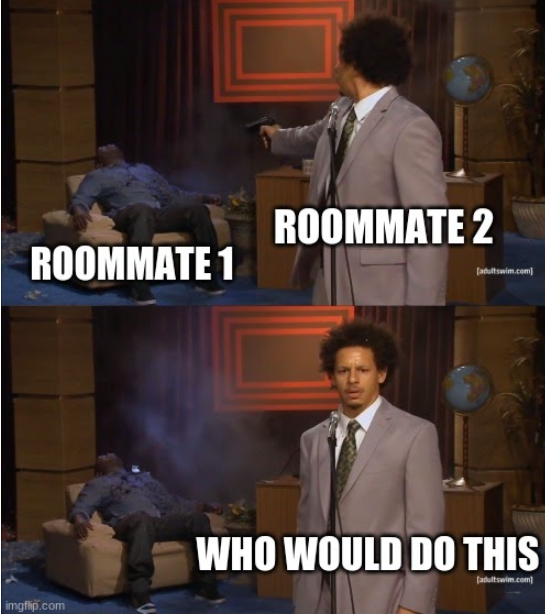
When saving your roommate’s life is FINALLY the “right” decision.

Should I give my dying grandpa pain medicine even though he said he didn’t want it?

TL;DR: A grandfather had stated to his family members previously in his life that he does not want any pain medication if he happens to need it when he is old. As of now, the grandfather is an old man who is suffering from memory loss and tons of pain due to an illness. Although the grandfather had told his family members not to give him pain medication, the time has come as to whether or not he is going to receive some. The family members are worrying about whether or not to give the grandfather the pain medication.

Mill’s answer would be clear in this situation: the family should give the grandpa the pain medication. Being a subjective consequentialist, Mill asserts that a good action is one that brings “the greatest amount of happiness altogether” (189). In this situation, we can assess the happiness in each scenario–if the family gives the grandpa the pain killers, and if they choose not to. If the family did not give the grandpa medicine, the grandpa would still be in pain and this would have repercussive effects on the family and their happiness. The grandpa being in more pain would only increase the stress and discontentment of the family, as well as the doctors who help the grandpa. The grandpa complaining less and being more calm would benefit everyone. The painkillers would increase the grandpa’s current happiness, increase the happiness of the family, and increase the happiness of any doctors helping the grandpa. Some would argue that the grandpa’s happiness would be less because he specifically mentioned not wanting pain killers in the past. But, the grandpa is already losing his memory and currently would be happier if the medication was administered. If the family is still hesitant about the grandpa’s wishes, they could ask him in the state that he is right now about painkillers. Even if the grandpa replies that he does not want medication, the family should still consent to him having it because it would increase their happiness and the happiness of the doctors. Additionally, because Mill defines happiness as “intended pleasure, and the absence of pain”, technically the grandpa’s happiness would be greater, though he does not want the medication (186). Medication would remove pain and increase pleasure in the case of the grandpa, so his opinion on the matter would not be important according to Mill. Overall, Mill would say that the family should give the grandpa pain medication, even if he does not want it.

Should I lie to a murderer at my door to save my roommate’s life?

TL;DR: Two roommates live in a house. Roommate one is in their room and relaxing. Roommate two is in the TV room by the front door. Roommate two hears a knock on the door and to his surprise it is a murderer asking whether or not roommate one is at the house. Roommate two has an opportunity to lie as to the whereabouts of where roommate one is, or he can tell the truth and ultimately end up allowing the murderer to kill roommate one and probably himself (Because no witnesses). Should roommate two lie to save his roommate’s life? 

As Mill represents the subjective consequentialist, concerned with outcomes, and unlike Kant who focuses on the lie, Mill would remain much more focused on the murder about to take place. Essentially, for Mill this becomes a question of saving the most amount of lives because this is connected to happiness; if I lie to the murderer, he/she might kill me as well as my roommate while if I lie, saying my roommates not home, the murderer may leave and we both survive. In this case, Mill would clearly side with lying to immediately protect these individuals’ happiness. As he represents the subjective consequentialist, it’s important to consider the murderers perspective. While the context and motivation for the murder may vary, for this murderer, killing the roommate is bringing them a sort of happiness at the expense of another’s life. While Mozi, the objective consequentialist, maintains ethical standards of contributing to the population or poor, Mill believes the morally right choice is that that produces the overall happiest result to benefit the maximum number of people. Murdering even one person is not producing the happiest outcome for the most number of people. For the above scenario because Mill is the subjective consequentialist and is therefore concerned with the outcomes of the action, Mill would advise the action that brings the greatest subjective happiness to the greatest number of people. Mill represents utilitarianism:


“The creed which accepts as the foundation of morals, Utility, or the Greatest Happiness  Principle, holds that actions are right in  proportion as they tend to promote happiness, wrong as they tend to produce the reverse of happiness. By happiness is intended pleasure, and the absence of pain; by unhappiness, pain, and the privation of pleasure”

Mill 186

Given this quote, it is apparent that Mill would advise the action that promotes happiness and absence of pain. Therefore if roommate #2 lies and says that roommate #1 is not home and this causes the murderer to leave, then both roommates are happy but the murderer is not. If roommate #2 tells the truth and the murderer then comes inside and kills roommate #1 (and possibly #2 as well for being a witness) then both roommates are dead and this is not beneficial to them and only the murderer is happy because this action was only beneficial for the murderer. Therefore, Mill would advise roommate #1 to lie in order to maximize the overall happiness of everyone involved.

Safe Protests and Sociopaths: Mozi’s Guidance

Overview of Mozi’s views:

Mozi is an objective consequentialist which means in order to conclude if one’s action is moral or not, the results of the action must be looked at. The central theory of his moral philosophy is inclusive care, also known as impartial care. Mozi states that “the business of a benevolent person is to promote what is beneficial to the world and eliminate what is harmful” (Mozi 68). This quote summarizes the whole idea behind inclusive care. To put this quote in other words, it means that an action is moral if the effect it has on the world is beneficial and if it reduces harms. In addition to this theory, Mohists examines actions based on three objective goods: enrichment of the poor, increase of population, the making of a well-ordered world (Mozi 80). If the action results in one of these goods, then it is a good and moral action.

He is not a subjective consequentialist and therefore does not look at subjective states such as happiness or sadness to determine if something is morally right. Within his argument, Mozi clears up questions that may come up, such as how does inclusive care work with filial piety, the virtue of respecting elders in your family. He states that his theory does not contradict filial piety, in fact it promotes it. To better understand this claim, he brings up a scenario in which asks the question of whether or not a filial son would want someone to steal from his parents or have them show his parents the same love and respect he does. Mozi responds by saying, “according to the very meaning of filial piety, he must want other people to care for and benefit his parents” (Mozi 74). With this said, Mozi argues that his theory of inclusive care guarantees that elders are treated the same by everyone by benefiting other people first which will in turn benefit his parents. He also goes on to say that those who are not filial impose a great harm on the world (Mozi 68).  

Prompt 1:

The first prompt we are discussing concerns a politically active member of society who wishes to be a part of the BLM protests however they are living with an immuno-compromised grandparent and juggles the morality of their responsibility for both the movement and their families health. Within Mozi’s view of this moral dilemma he would say that said person should do both. However, he would form caveats around how the person would lend themselves to the BLM movement to keep their family safe.

Mozi is fundamentally an objective consequentialist which means he doesn’t care of others’ subjective wants but rather how the consequences are evaluated through the objective goods. The three objective goods include: enrichment of the poor, increase of population, and making of a well-ordered world. As well, Mozi identifies two classes of harms which are power relations and someone lacking in virtues. Ultimately, Mozi’s fundamental belief is impartiality as he said “If people regarded other people’s states in the same way that they regard their own, who would then incite their own state to attack that of another? For one would do for others as one would do for oneself (68)”.

Concerning the prompt and following along the lines of the objective goods, the great harms, and the significance of impartiality Mozi would believe that the person should lend themselves to the BLM movement however not through the protest because the person would be committing the two great harms. Thinking within the lense of impartiality if said person posing the question is “regard[ing] other people’s states in the same way they regard their own” then this person would lend themselves to the BLM movement but not through protest to keep their family’s health safe. Mozi believes that going to the protest and risking the health of the grandparents would be wrong because it would violate both of the great harms. Mozi said that the great harms included; “the noble acting arrogantly toward the humble […], and children who are not filial (68)”. If this person were to go to the protest, though their wants of lending themselves to the movement is “noble”, they would be “acting ignorant” towards their immuno-compromised grandparents. Furthermore, this person would be doing the opposite of being “filial” by not lending their respect to their elders.

However, Mozi would believe that the person should lend themselves to the movement due to the three objective goods. Mozi says that one of “the ways that benevolent people plan on behalf of the world (80)” is to “do what they can to make it well ordered (80)”. If the person where to lend themselves to the BLM movement through circulating resources, donating, education, and discussions with others then they would not only be doing “what they can to make [the world] well ordered” but are also following the virtues of filial piety and the objective goods by keeping their grandparent safe. Mozi would say to this person to not go to the protest to keep their grandparents safe but to still do what they can through benevolence towards the BLM movement.

Prompt 2:

TLDR: Should the father of a 25yr old woman with diagnosed antisocial personality disorder tell her future fiance about the diagnoses?

For this moral quandary we are concerned with whether someone’s father should reveal her diagnosed sociopathy to her future fiance. The sociopath daughter has decided not to tell the man who is expecting to marry her. The daughter is self aware, in therapy, and is successful, but has little deep emotional connection to the people. She masks her true lack of emotional connection by performing emotions at funerals or other important moments. The father does not believe that she loves her future fiancé in the way people normally love one another.

There are several components to this, first it is important to examine the basic character of the daughter as of now. It is not the case that Mozi is overly concerned with the emotions we have towards others rather than the actions we take that impact them and society as a whole. In this text post, the father details how the daughter was violent to her sister when she was much younger. Mozi might say that this goes against one of the three objective goods, namely the “well-ordered world” (Mozi 80). You should not act violently towards your family 1) because it violates filialpiety and 2) because this action does not show inclusive care (Mozi 80). However based on the meaning of filial piety, individuals should want other people to “care for” the people they love in the same way as that they do (Mozi 74). If this care was about ‘love’ then it would be debatable whether the daughter could truly offer the fiance care, but care seems to be more of a mark of deference rather than a mark of love, so a sociopath isn’t blocked from doing it, there might just be more hurdles to get over in order to motivate them. So, the daughter is capable of caring for her future fiance but it doesn’t appear that this unfolds naturally from her character.

At the same time, Mozi would probably be less concerned with the way she feels about her partner than he is about how she treats him. One issue that could emerge here is the issue of partiality, sociopaths are not an entirely uniform category but some tend to do what benefits them most, with little consideration for promises, agreements, or social connections. The daughter might tend towards partiality towards herself in almost all cases. Mozi condemns partiality, and father would certainly be acting impartially in this case if he went to the future fiance with this information as he would likely want to be personally aware of this fact. On the other side, it might be that he is doing harm to the daughter by disclosing this information because there is a chance that her partner will leave her, but that would only matter to Mozi because the potential for population increase would be slightly reduced. Mozi’s other two objective goods include “enriching the poor [and] increasing the population” (Mozi 80). If the father blocks the engagement and wedding, and possibility for children, then he will have worked against one of Mozi’s actions. 

If the daughter is committed to being a healthy law abiding citizen to the best of her ability, why does she need to disclose that she is diagnosed with a mental illness? Some of the strongest arguments came from people who talked about how she could be dangerous in the future if things don’t go well or how the but plenty of people marry people who turn out to be addicts or cheaters, who simply ruin their marriage in other ways. These problems are not always so hard to see coming, especially if couples are putting the work in regular therapy appointments before huge problems arise rather than after the damage is done. The association between criminality and personality disorders is common, and misleading. The example of her harming her sister when she was young is disturbing, but probably not all that common and also not exclusive to sociopathic children. 

Overall, Mozi would support the father telling the fiance about the daughter’s mental illness. The fiance does deserve to know, not because of future hypothetical children or because of the daughters complex past, but because it’s part of her as a person and keeping it from him prevents him from knowing her as fully as he should. A consequence of keeping it a secret might be that he could only love her partially, denying the daughter the experience of being loved by someone who is not outside her family and preventing him from being fully in contact with reality.

Conclusion of Mozi’s views:

Mozi is interested in increasing the population, bettering the lives of the poor, and contributing to a well-balanced society through action, these are the concrete objective goods. Mozi values filial piety, but not only in the traditional sense where individuals must show deference to their family but also such that care is inclusive of other people’s family members and we treat them as we treat our own. This is a consequence of Mozi’s value of impartiality, in which Mohists should not show special consideration for their own desires over others.

One objection to this view is external consequences are not sufficient to building a good morality. Moral motivation might be a challenge here, if people do not believe that the poor deserve aid, etc. Moral desert seems to be pretty compelling though, we would be very motivated to be impartial if we believed that this impartiality would help us in the future as well. What is right and good depends on the consequence of the action, not exclusively what kind of action it is, so there is a lot of space for people of all walks of life and levels of education to participate in this moral system without having to ponder maxims or universality, which can be pretty extensive and critical.

Religion and Morality

Mozi identifies two classes of harms: power relations, and lacking of virtues. The unifying source of these harms is partiality, so the solution is impartiality:

“For one would do for others as one would do for oneself.”

(Mozi 16; p. 68)

Thus, Mozi is an objective consequentialist. In order to explain objective consequentialism, we should first define and explain some terms. Consequentialists try to care about everyone equally, while egoists prioritize their own wellbeing. Consequentialists care about the result of their action, or, what happens due to the action they take. These philosophers ask, does the action I am taking promote what’s beneficial, or eliminate what’s harmful? These are typically the guidelines they use to frame “goodness” through. An objective consequentialist believes that actions shouldn’t be viewed with the goal of making people “happy” per se, but rather if said actions contribute to the objective goods. “…one must regard the well-being of one’s friends as one regards one’s own well-being; one must regard the parents of one’s friends as one regards one’s own parents.” (p. 70)

Mozi provides the following framing for how to assess moral goodness. Three objective goods: (Mozi 25, 32):

  1. The enrichment of the poor
  2. The increase of population
  3. The making of a well ordered world

Mozi believes that humans are inherently good. This differs from Xunzi’s branch of objective consequentialism, that states that humans need rituals to act good.

A Response to Homophobia

Read the original post here. The situation is that a person commented on the OP’s same-sex relationship saying “hate the sin, not the sinner” and this person has regularly implied their belief that same-sex relationships are immoral. The OP responded “yeah, well, hate the belief, not the believer” in order to communicate that they disagreed with the religion that tells them that their relationship is inherently immoral. But the religious person then got incredibly upset and many are telling the OP that what they said was much worse than what the person had said.

Since Mozi believes that “the business of a benevolent person is to promote what is beneficial to the world and eliminate what is harmful” (Mozi 16; 68) then any actions that promote what is beneficial to the world would be viewed by Mozi as moral and praiseworthy. Therefore, the question is whether or not this person speaking out against a person who was disparaging their relationship was beneficial to the world. I would argue that this person speaking out was beneficial to the world due to the fact that homophobia and prejudice as a whole does a great deal of harm in this world. Moreover, this person went out of their way to comment on the poster’s relationship without being asked and had previously implied “the need of spiritual help with [the poster’s] condition.” This person is clearly not only prejudiced against same-sex relationships but goes out of their way to express this prejudice to people.

The OP speaking against this behavior is beneficial as hopefully it promotes the fact that bias is unacceptable and harmful and this person’s comments are offensive and need to stop. The poster even mentioned “hope that my words would put what she’s being doing to me into perspective for her.” Even though what was said did upset this person, since this action was done out of hope of making her see the error in her ways and eliminate bias in this world that is harmful then overall Mozi would likely state this action is beneficial to the world and therefore moral. 

Health vs. Religious Views

“Meet Amy.  Amy is a 22-year-old who has a degenerative brain condition.  Left untreated, this brain condition has symptoms similar to Alzheimer’s, beginning with the gradual loss of memory and advancing to loss of more basic functioning, and ultimately death.  In the later stages of this disease, Amy will have no memories of who she is.  Unlike Alzheimer’s, however, this disease is treatable, and ultimately reversible.  If the condition is reversed, the patient will regain memories prior to the onset of the disease, but not any memories from the later stages of the disease.

Treatment is covered by insurance and has relatively minimal side effects.  However, Amy is a member of a religious sect with strong views on modern medicine.  Members of this sect are prohibited from any medical treatment beyond the most basic (think first aid, aspirin, etc).  Although the sect’s guiding text does not specifically mention this disease, it can be clearly inferred from what the text does say, as well as the practices of the sect, that treatment of the condition would violate Amy’s religious beliefs.  Amy is not interested in treatment for this reason, and refuses to consider it.  Amy’s parents want her to be treated, but know that Amy’s religious convictions mean that this would be impossible.  However, they believe that it would be acceptable to compel her to be treated once she has forgotten these religious beliefs as a consequence of her disease.

Disregarding any legal factors, would it be morally acceptable for Amy’s parents to convince her to seek treatment in her memory-less state?  Why or why not?  Is no-memory Amy the same person as memory-Amy?”

This would not be a morally acceptable action for Amy’s parents to take. Mozi, a classical Chinese philosopher, stated “that If people regarded other people’s states in the same way that they regard their own, who then would incite their own state to attack that of another? For one would do for others as one would do for oneself” (68). Mozi is saying that the way to act morally is for you to hold another person in equal regard when compared to yourself, if you consider everyone the same way you consider yourself you would never cause any type of ill will to them. This is because no person would intentionally cause themselves harm or go against their own beliefs. This is applicable to Amy’s situation because her parents need to put themselves into her shoes, by doing so they will be sympathetic to her beliefs and would most likely not follow through with this decision. Based on Mozi’s philosophy this is the case due to the fact one should always do unto others as they would do unto themselves, and it is safe to say they would not want their wishes to be disrespected.

To strengthen this point of view Mozi gives a short anecdote about a man who takes control of a city. After this Mozi examines his motivation for doing so and the conclusion reached was he did it “not because he wanted to increase his wealth and honor, earn for himself additional favors and blessings, or because it pleased his eyes and ears, but rather because he wanted to contribute to the benefit of the world and eliminate what is harmful to it” (73). Based on this Mozi would tell Amy’s parents that even though they are able to get their daughter back the choices they make should not be for their benefit, the same way the man from the story could have received rewards of all types his actions were not seeking them. Her parents need to consider what is harmful to their daughter, if they choose to coerce her then they would be causing her harm as they would be disrespecting her wishes. So it becomes clear that Amy’s parents need to act in a way that is beneficial for her and not for them, this might mean sacrificing their daughter, but in doing so they are combating the greatest evils in the world.

The Biting Dilemma of Consequences

 Losing a family pet can be a difficult thing to do, especially when using the philosophy in question to make a moral decision. In this moral problem we see a family member who sees that the dog of another family member is not doing well physically, as it has been deteriorating more and more every time the person visits. Is it moral to tell the family members about the worry for the dog? And if not how much should the dog be able to die before the family takes action? In order to be moral you must tell the owners of the dog as it is immoral to keep an animal in pain, it is also immoral to take the dog to the vet and spend money on it as that money could go to making other dogs live a longer and healthier life. There is no easy decision here but in order to be moral feelings must be put aside to make sure an innocent animal no longer suffers.

This is certainly a difficult situation to be in; however, the reality of the situation is that we must think in terms of consequences. According to the philosopher, Mozi, “The business of a benevolent person is to promote what is beneficial to the world and eliminate what is harmful.” (Mozi, 16; 68) In other words, we must focus not on what makes us happy or unhappy and instead act in ways that create positive objective change either which, in this case, would be the making of a well-ordered world. As such, although the decision will be emotionally difficult, we advise that you let your family dog go. In his critique of Mozi, the philosopher Xunzi has stated that if humans act upon their desires (rather than objective goals) then the world will lead to chaos. Acting to prolong your dog’s life is to act on your desires and, while it might bring your family temporary happiness (at a financial cost), you will still eventually have to let your dog cross the rainbow bridge. This time, however, the dog might experience exacerbated pain during their extended lifespan; this is some of the chaos that Xunzi alludes to – that and the fact that keeping your dying pet alive ultimately prevents another animal that is just as worthy of a loving home of having a safe and fulfilling life. This, of course, isn’t to say that your family dog is replaceable; rather, it is to say that actions to keep it alive stem from a selfish human desire which, according to Mozi, is not the moral thing to do.

The United States is currently in a time of protest and change, all in the midst of a global pandemic that has killed far too many people. In this moral problem we see someone who really wants to participate in the protests for BLM as they are politically active, but sadly they live with their grandparents who are at risk to contract Covid-19. Is it moral to go and possibly infect your grandparents to protest the horrible things happening in the US right now? It is important to remember that Mozi wants pure impartiality and to follow the inclusive care framework, meaning that we recommend that they person does not go and participate in the in person protests to remove harmful action to their loved ones. 

In this scenario, the individual who wishes to go to the protest must keep in mind ways to remain impartial when making this decision. A thought experiment that may help them with this decision is how they would advise a stranger facing the same dilemma. Under Mozi’s inclusive care framework, all individuals possess the same value. Therefore, instead of seeing the grandparents as people that are related to the individual, see them as strangers that are fearful of the virus. This may help given that it is easier to take advantage of individuals one feels more comfortable with. By detaching oneself from familial bonds, the individual can begin to recognize the merit of their action. From an outside perspective, this scenario paints an important hierarchy of pleasure. By going to the protest and defying your grandparents frail state, the result of the action is pleasure solely for the self. Moreover, I would argue that the pleasure the individual may experience from the protest is short-lived. As soon as they return home, they are reminded of the danger they have put their grandparents in. On the other hand, staying home is not only generating pleasure by potentially keeping the grandparents alive, but also from their gratitude that they will express toward the individual. I believe Mozi would argue for staying home because the individual would be acting partially as well as removing the threat of harmful action. 

We arrived at this moral advice primarily through the lens of Mozi’s moral philosophy; that is, via the lens of objective consequentialism. The primary principles that we applied to the above situations were – to promote what is good in the world and eliminate what is harmful (Mozi 16; 68), and Mozi’s idea of inclusive care which means to essentially treat every human being equally, no matter what your relationship is to them (family member, stranger, or friend, etc.). By practically applying these ideas and principles to the moral quandaries above, we came to our conclusions.

For the situation involving the family dog, it is our belief that the right and just thing to do here would be to let it go. This is because allowing the dog to remain in a prolonged state of suffering not only hurts the dog, but it also harms the owners of the dog (financially and emotionally). Because they have the direct power to stop this bad situation, they should, according to objective consequentialism.

For the dilemma involving going to the protests or staying home to protect one’s family members, we decided that the just thing to do would be to stay home. This is not only to practically maintain the safety of everyone involved (which should be a duty of everyone), it also spares oneself and one’s family members from (emotional) suffering. Something else to note here is that even though the person in question would not be attending an in-person protest, there are many other ways to get involved in social movements such as donations and online advocacy. To stay home and protect one’s family is not to completely forego political activism. 

To reiterate, according to Mozi’s moral theory, one has the duty to promote what is right in the world and eliminate what is harmful, and to treat everyone as equals. It is these principles primarily that we drew upon to discern our moral advice for the two specific dilemmas above. 


To Pay or Not To Pay… That is the Question

Coffee+Brownies=Mad Father… But can I do it anyways?

TL;DR: This individual is concerned about whether or not she is an a-hole for baking brownies with coffee in it because her father does not like coffee in them. She has gotten into baking since Covid started and has become very interested in the subject. Her father asks her to remove the coffee but she is adamant that it is up to her as to what goes into the brownies. Her father eats the brownies nonetheless, even though there is coffee in it and still complains to her. She is wondering if she is the a-hole for not adding coffee even though her fathers hates coffee, yet he eats it anyways.

In the above scenario, the brownies were made for the individual and not for the individual’s father but the father was upset that there was coffee as an ingredient of the brownies and yet he ate the brownies knowing that there was coffee in them. The individual wants to know if they are an asshole for including coffee in their personal celebratory brownies and based on Mozi’s philosophy we have decided to assess the consequences of this action rather than the intent. There are two possible options that could occur: the individual includes coffee in their brownies or they do not. The consequences for keeping the coffee in the brownies yield 3 happy family members who eat the brownies, and 1 unhappy family member that still eats the brownies. The consequences for removing the coffee from the brownies results in 2 family members that eat the brownies but do not enjoy them as much as if they had coffee, 1 very happy family member who eats the majority of the brownies leaving fewer and less tasty brownies for the rest, and 1 very unhappy family member who dislikes having their recipe altered and having their father eat all of their brownies. It is clear that the less desirable result for the majority occurs when the coffee is removed so by removing the coffee, the individual would be acting partially toward their father. Mozi condemns partiality,


“The business of a benevolent person is to promote what is beneficial to the world and eliminate what is harmful”

Mozi 68

Relating to Mozi’s quote, in order to bring the most benefit and eliminate the most harm, the individual must consider the above mentioned consequences and consider what would bring the most good to the majority of the family. From this, we can conclude that because the individual in the scenario discovered this recipe prior to this instance, and when they first added coffee all 4 individuals in the household enjoyed the brownies and ate them but only the father got upset about the ingredient. Because the father still eats the brownies regardless of whether they contain coffee or not, by adding coffee the individual is bringing joy to 4 people. If the individual had not included coffee, they personally would have been upset and enjoyed the brownies less and given that the mother and brother prefer cooking with added ingredients, it is likely that they would also enjoy the brownies less. Therefore, although the coffee ingredient angers their father, the coffee is still bringing joy to the most number of people. Therefore it would not be treating everyone impartially to take away an ingredient that the majority prefers just to satisfy the minority. Similarly, the brownies in question were made for the individual only but the father still ate 3 of them willingly and knowing that they contained coffee. We do not consider the individual to be the asshole.

Do I have a moral obligation to pay medical bills for someone I hit with my car even though I was not at fault?

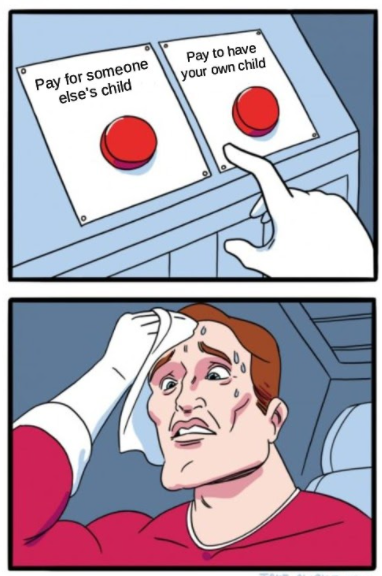
TL;DR: This individual was driving home from work on a 4-lane road with a 45 mph speed limit that has a divider in between the lanes. A group of teenagers were standing on the divider waiting to cross once the traffic lights changed. The traffic lights did not change and a teenager decided to walk right in front of the car. The driver slammed on the breaks but could not swerve due to other cars driving right next to her. She ended up hitting the teenager and he ended up with injuries but survived. The teenager knowingly walked in front of oncoming traffic without a change in traffic lights and ended up getting it. Even if the driver could have stopped in time, the other car over probably would have hit the teenager. The driver was sued by the teenagers parents and ended up being found not at fault every time. The parents of the teenager think the driver should be paying most if not all of the medical bills of the teenager, even though it was 100% the teenagers fault. The driver believes she has a moral obligation to pay at least some of the medical bills. The driver and her husband are already planning on having a child via IVF, which is expensive as it is, but the husband has a moral conflict as to whether or not they should pay the bills to the injured teenager or have their own child (via IVF). The individual is wondering whether or not she is the a-hole for not paying for the injured teenagers medical bills. 

Mozi represents objective consequentialism and is therefore only concerned with the resulting outcome. Here, Mozi would most likely tend to side with the driver as the events transpired and the consequential results do not promote moral goodness. To accomplish this, actions must promote enriching the poor, contributing to the population, or establishing order. This specific situation offers a unique perspective as the events conflict against each other in Mozi’s criteria analysis. “Looks at consequences of either action: not helping and helping. Do these consequences align with promoting enrichment of poor, increasing population, and making order,” (80). By knowingly defying the law and refusing to cross at the properly designated locations, this individual is incorrectly assessing the situation and not accounting for others in considering the consequential ramifications for their actions. After the damage has been done, it is unrealistic to expect the driver to pay for another’s mistake, although, according to Mozi, some consideration should first be examined. While paying the pedestrian’s family would satisfy Mozi’s first criteria of enriching the poor, in this specific situation where the pedestrian remains completely at fault, answering this question still remains difficult today. Assessing the second criteria does not appear to clarify the answer further as ensuring the driver pays reparations to the pedestrian would be indirectly withholding funds the driver’s family planned for their first child.


“If people regarded other people’s families in the same way that they regarded their own, who then would incite their own family to attack that of another? For one would do for others as one would do for oneself”

Mozi 69

Here, a quick glance at a role-reversal scenario illustrates how indirectly taking money planned for the birth of a child is most likely interpreted by each party in the same manner, it is unreasonable to expect. The last criteria is the tie-breaking vote; by paying the reparations, the driver may accumulate negative affect and emotions towards having to pay large sums of money to someone who foolishly made a very dangerous decision that put both themselves and the driver in harm’s way. In this way, the driver’s family loses money, meaning they potentially may not be able to afford the procedure to give them a child, or must wait again to save enough to complete the procedure later on only increasing the likelihood of complications with the woman’s increasing age.

In addition, while the pedestrian’s family shouldn’t be punished for his mistakes, having the innocent driver pay prevents any learning to occur. While unjust, the decision the pedestrian made should be paid by that individual alone yet, seeing as medical expenses divert to the family, while unfortunate, owning up to the consequences of parenting and decision making should be kept to the side at fault. The animosity experienced by the pedestrian’s family is not comparable to the disorder caused by an innocent family having to sacrifice their hard-earned money to pay for the damage of a mistake made by a young adult.

Considering both situations where the driver does or does not pay in accordance with Mozi’s criteria does not give one concrete morally correct answer but does reason the better choice, all things considered. If the driver does not pay reparations, according to the criteria set by Mozi, it would be most morally logical that the pedestrian’s family pay alone, ensuring the pedestrian heals properly, with some financial burden as the consequence for their actions while the driver’s family can continue to plan to have the procedure done and start a family, effectively contributing to the population and increasing order in society. 

Death Upon Trump and Mr. Bič

Buss argues that manners are vital to Kantian ethics as appearing respectful is to treat someone in a way that acknowledges their intrinsic value. But Buss also acknowledges that there are some key differences between manners and morals for instance manners encourage us to be agreeable, manners are about appearances, and manners are culturally relative. These differences are notable, but do not undermine manners’ moral significance.

While manners might not be synonymous with morals, the two ideals are closely connected as “making oneself agreeable to others is not only an end in itself; it is also, and more importantly, a means to treating them with respect” (798). In other words, Kant states that to act morally, all people must be viewed as an end in and of themselves not merely as a means to an end. Manners help promote this view through the fact that “good manners, then, not only inspire good morals. They do so by constructing a conception of human beings as objects of moral concern” (800).

Moreover, Buss also mentions that “social disharmony could not fail to adversely affect people’s willingness to regulate their behavior according to certain principles of justice” (799) for three reasons. First, people who are angry and resentful are less likely to help others. Second, people who are disagreeable alienate themselves from others and don’t care about their wellbeing. Finally, people who aren’t in the habit of treating others with respect are not conditioned to seeing people’s inherent worth. Therefore, Buss states that morals are significant for Kantian ethics as they are necessary to promote and cultivate the respectful treatment of all humans.

Wishing Death Upon Trump

Are individuals justified in wishing death upon trump? 

Trump does / did lots of bad, morally wrong shit. Lots of people think the world would be better off without him in it, and some even wish for his death. Is this morally wrong through Buss’ framing?

Our group thinks that there is an important distinction between wishing something would happen and verbalizing that wish. One is a thought while the other is an action that has an effect on others. We’re going to focus on the implications of verbalizing these wishes, because that’s what we’ve deemed most applicable to Buss’s theory. Manners are acting in a way that may not necessarily be in line with your thoughts due to social norms and protocols. Manners are a method of appearing respectful to others. We do this to exhibit that we view other people as ends, rather than just a means to an end. 

It is impolite to verbalize a death wish for anyone because it disregards that people are ends in themselves. Buss believes that regardless of what a person has done, it is still impolite to be rude to them, because it is displaying that you don’t care about their life or acknowledge their intrinsic value as a person. Even though Trump has shown a complete disregard for the humanity of others, Buss still claims that we should extend that nicety/formality to him.

Just because it is impolite, does this mean that it is also immoral? Buss would say yes, it is immoral, because treating people as a means to an end is not acknowledging their special dignity. Every person has inherent value, and we act politely because we directly acknowledge that they are worthy of respect (802). According to both her and Kant, all people deserve to be treated with respect, regardless of whatever unjust or immoral actions they may have taken themselves. To treat another person any other way is thus immoral.

Mr. Bič

In this problem, we are introduced to a man who works at an international company. At this company it is customary to refer to people via their last name. This man, who’s last name is Bič, is from Czech Republic and most of the people he works with are from the United States. When his American coworkers say his name it sounds a lot like Mr. “Bitch”. Many of the people who work with them do not wish to use this to refer to him as they work from home and are around their families for most of the work day. At first his coworkers called him Mr. Birch but he felt slightly offended and corrected them which led them to request a new representative from the company. Due to the drastic difference in time zones he is the only one capable of working with them. This management has pressured him to accept being called Mr. Birch but he believes that this is unjust and he might even have grounds to file a discrimination complaint.

By not referring to Mr. Bič by his proper name, the Americans are not only disrespecting him but also the company custom of calling people by their last name. Buss states that “good manners, then, not only inspire good morals. They do so by constructing a conception of human beings as objects of moral concern” (800). This shows, for both Buss and Kant, that when his coworkers choose to not use his proper name they are not treating him as an object of moral concern which means they are treating him as a pure means. Buss shares their belief that “social disharmony could not fail to adversely affect people’s willingness to regulate their behavior according to certain principles of justice” (799). This statement tells us that by not using Mr. Bič’s proper name they are pushing him towards being resentful by not treating him as though he has inherent value by refusing to call him by his name.

In Buss’s article, she makes the argument that manners are very important especially within Kantian ethics, this situation Mr. Bič has found himself in shows the clashing of two different cultures. In his culture, Mr. Bič means “the whip”. Even though the American staff feels as if they are breaking their own moral code by using a perceived curse word in front of their families they are actually disrespecting Mr. Bič and the company custom of using a person’s last name. Discussing this particular situation with their families could easily solve any moral code they think they are breaking by using his real name while also granting him and the company custom the amount of moral concern they are entitled to.

Synthesis

Both of these problems have to do with disrespecting a person by not acknowledging their intrinsic value. Though one is on a greater scale of wishing death upon someone, and one is on a smaller scale of mispronouncing someone’s name, both are immoral because ultimately, treating someone disrespectfully means viewing them as a means rather than an end. Even in a case like the first one, where the person in question has committed immoral acts themself, it is not up to us to judge how that person should be treated. At the end of the day, we are all human beings and all human beings have an inherent value, thus making them worthy of respect. 

What To Do About My Terribly Dysfunctional Family

WIBTA for not apologizing to smothering in-laws?

TL;DR: This woman is having her first child with her husband. The husband’s parents have never really paid them any attention until they found out that their son and daughter in-law were going to have a child. So, the parents began involving themselves into much of their kids’ lives; Often giving their opinion about decisions that are not theirs to make and imposing themselves upon their kids’ lives. It has gotten to the point that both the husband and wife have told the parents to back off, yet they do not and continue to impose their wishes and opinions on the lives of their kids. One day, the newly pregnant wife was minding her own business and the parents showed up and began berating the wife. She couldn’t take it any more and lost her temper, blowing up on the parents and telling them that they are not welcome around her, her family, and her house. The parents ended up leaving hesitantly and other family members from the husband’s family are demanding an apology from the wife. The husband thinks that she should not apologize and the wife is wondering if she is an a-hole for not apologizing. 

In the above scenario, both the wife and the smothering in-laws have both failed to treat each other respectfully. The wife shouted for the in-laws to leave and the in-laws called the wife an “ungrateful bitch” and were trying to control the wife’s entire pregnancy. While both are in the wrong, our advice for the wife stems from Buss’ moral philosophy based on mutual respect and treating others with dignity. Buss writes, “to treat someone ‘with respect’ is to treat her in a way that acknowledges her intrinsic value, or ‘dignity.’ This is a value she has no matter what her deeds and accomplishments may be; it is tied to what she is, not to what she has done” (797).

Though the husband’s parents acted in ways that irritate the wife, Buss advises that the wife should still treat them with dignity and respect because they still have intrinsic value, even though she might think their actions do not. The in-laws certainly treated the wife without dignity, but the wife’s response should be to apologize. When the wife snapped back at the in-laws she failed to acknowledge their dignity in that moment. It is for this reason that regardless of what the in-laws had done, and whether or not it was justified, the wife should apologize. Similarly for the in-laws, regardless of the wife’s actions, they too need to apologize. Our advice is to then have a calm discussion with the in-laws in which the wife apologizes for her yelling, and then facilitates a discussion about her and her husband’s needs and how they alone should make the decisions about their child in order to prevent future situations like this.

AITA for refusing to hug my cheating mum?

TL;DR: This individual found out that her mother was cheating on her dad with another man that she had met through a mutual friend. The mother has been sending explicit messages and photos back and forth with the other man without her father knowing. The individual confronted her mother and her mother promised that she would stop. Eventually the mother told the father but had omitted the truth about the types of messages being sent to the other man. A month passes and the individual finds that her mother is still sending messages, so the daughter confronts her again. The mother swears on her grandchildren that she will stop, but she does not stop. A week later, her mother asks for a hug, but the daughter cannot and has not forgiven her for manipulating her father and consistently lying, so she politely denies the hug from her mother. The mother then becomes angry and storms out of the room. The daughter doesn’t want a relationship with her cheating mother and has been informed from her father that her mother now hates her. The daughter is wondering if she is the a-hole for not wanting to hug her mother.

Buss’s main argument, in relation to Kant’s philosophy, demonstrates that morality is the result not merely of agreeableness, but in demonstrating respect and dignity for others. Just as we would want for ourselves, we too should show respect through societally agreed upon activities and events that quickly establish a mutual groundwork of human deference. Morality does not come from simply performing these actions but in genuinely conveying and meaning to show respect and caring of others, again, as we would expect for ourselves. In this particular situation, it is clear to see the mother is not respecting anyone in her family by continuing to flirt with another man. This can be seen from multiple perspectives and each view results in the same conclusion; the mother’s actions are both immoral and disrespectful to her family members as well as herself.

However, regarding the author of the post, in answering this question, “am I the asshole for not hugging my mother,” Kant and Buss would most likely agree that the daughter is also demonstrating immoral behavior. While her actions may be warranted due the mothers immoral behavior, the daughter is responsible for her own actions which she can justifiably choose, unlike her mother, to take the moral high ground. Personal emotions may prevent her from physically showing affection, withholding this affection will not solve her problems, only exacerbating them, demonstrated in the mothers tantrumatic response.

Although a less favorable path, the daughter should apologize and should try to come to a solution of talking with her mother rather than withholding affection as an incentive for her to stop cheating as this demonstrates very little respect or dignity. As Buss states, “human beings deserve to be treated with respect, that they are respectworthy, that is, that they have a dignity not shared by those whom one does not bother to treat with such deference and care” (Buss, 801). Whether or not the mother responds with moral actions is unpredictable but according to Buss and Kant, moral action dictates the daughter should own up to her mistake, openly voice her concerns, frustrations, issues with her mother, and eventually accept the mistake and person for who her mother is.