Safe Protests and Sociopaths: Mozi’s Guidance

Overview of Mozi’s views:

Mozi is an objective consequentialist which means in order to conclude if one’s action is moral or not, the results of the action must be looked at. The central theory of his moral philosophy is inclusive care, also known as impartial care. Mozi states that “the business of a benevolent person is to promote what is beneficial to the world and eliminate what is harmful” (Mozi 68). This quote summarizes the whole idea behind inclusive care. To put this quote in other words, it means that an action is moral if the effect it has on the world is beneficial and if it reduces harms. In addition to this theory, Mohists examines actions based on three objective goods: enrichment of the poor, increase of population, the making of a well-ordered world (Mozi 80). If the action results in one of these goods, then it is a good and moral action.

He is not a subjective consequentialist and therefore does not look at subjective states such as happiness or sadness to determine if something is morally right. Within his argument, Mozi clears up questions that may come up, such as how does inclusive care work with filial piety, the virtue of respecting elders in your family. He states that his theory does not contradict filial piety, in fact it promotes it. To better understand this claim, he brings up a scenario in which asks the question of whether or not a filial son would want someone to steal from his parents or have them show his parents the same love and respect he does. Mozi responds by saying, “according to the very meaning of filial piety, he must want other people to care for and benefit his parents” (Mozi 74). With this said, Mozi argues that his theory of inclusive care guarantees that elders are treated the same by everyone by benefiting other people first which will in turn benefit his parents. He also goes on to say that those who are not filial impose a great harm on the world (Mozi 68).  

Prompt 1:

The first prompt we are discussing concerns a politically active member of society who wishes to be a part of the BLM protests however they are living with an immuno-compromised grandparent and juggles the morality of their responsibility for both the movement and their families health. Within Mozi’s view of this moral dilemma he would say that said person should do both. However, he would form caveats around how the person would lend themselves to the BLM movement to keep their family safe.

Mozi is fundamentally an objective consequentialist which means he doesn’t care of others’ subjective wants but rather how the consequences are evaluated through the objective goods. The three objective goods include: enrichment of the poor, increase of population, and making of a well-ordered world. As well, Mozi identifies two classes of harms which are power relations and someone lacking in virtues. Ultimately, Mozi’s fundamental belief is impartiality as he said “If people regarded other people’s states in the same way that they regard their own, who would then incite their own state to attack that of another? For one would do for others as one would do for oneself (68)”.

Concerning the prompt and following along the lines of the objective goods, the great harms, and the significance of impartiality Mozi would believe that the person should lend themselves to the BLM movement however not through the protest because the person would be committing the two great harms. Thinking within the lense of impartiality if said person posing the question is “regard[ing] other people’s states in the same way they regard their own” then this person would lend themselves to the BLM movement but not through protest to keep their family’s health safe. Mozi believes that going to the protest and risking the health of the grandparents would be wrong because it would violate both of the great harms. Mozi said that the great harms included; “the noble acting arrogantly toward the humble […], and children who are not filial (68)”. If this person were to go to the protest, though their wants of lending themselves to the movement is “noble”, they would be “acting ignorant” towards their immuno-compromised grandparents. Furthermore, this person would be doing the opposite of being “filial” by not lending their respect to their elders.

However, Mozi would believe that the person should lend themselves to the movement due to the three objective goods. Mozi says that one of “the ways that benevolent people plan on behalf of the world (80)” is to “do what they can to make it well ordered (80)”. If the person where to lend themselves to the BLM movement through circulating resources, donating, education, and discussions with others then they would not only be doing “what they can to make [the world] well ordered” but are also following the virtues of filial piety and the objective goods by keeping their grandparent safe. Mozi would say to this person to not go to the protest to keep their grandparents safe but to still do what they can through benevolence towards the BLM movement.

Prompt 2:

TLDR: Should the father of a 25yr old woman with diagnosed antisocial personality disorder tell her future fiance about the diagnoses?

For this moral quandary we are concerned with whether someone’s father should reveal her diagnosed sociopathy to her future fiance. The sociopath daughter has decided not to tell the man who is expecting to marry her. The daughter is self aware, in therapy, and is successful, but has little deep emotional connection to the people. She masks her true lack of emotional connection by performing emotions at funerals or other important moments. The father does not believe that she loves her future fiancé in the way people normally love one another.

There are several components to this, first it is important to examine the basic character of the daughter as of now. It is not the case that Mozi is overly concerned with the emotions we have towards others rather than the actions we take that impact them and society as a whole. In this text post, the father details how the daughter was violent to her sister when she was much younger. Mozi might say that this goes against one of the three objective goods, namely the “well-ordered world” (Mozi 80). You should not act violently towards your family 1) because it violates filialpiety and 2) because this action does not show inclusive care (Mozi 80). However based on the meaning of filial piety, individuals should want other people to “care for” the people they love in the same way as that they do (Mozi 74). If this care was about ‘love’ then it would be debatable whether the daughter could truly offer the fiance care, but care seems to be more of a mark of deference rather than a mark of love, so a sociopath isn’t blocked from doing it, there might just be more hurdles to get over in order to motivate them. So, the daughter is capable of caring for her future fiance but it doesn’t appear that this unfolds naturally from her character.

At the same time, Mozi would probably be less concerned with the way she feels about her partner than he is about how she treats him. One issue that could emerge here is the issue of partiality, sociopaths are not an entirely uniform category but some tend to do what benefits them most, with little consideration for promises, agreements, or social connections. The daughter might tend towards partiality towards herself in almost all cases. Mozi condemns partiality, and father would certainly be acting impartially in this case if he went to the future fiance with this information as he would likely want to be personally aware of this fact. On the other side, it might be that he is doing harm to the daughter by disclosing this information because there is a chance that her partner will leave her, but that would only matter to Mozi because the potential for population increase would be slightly reduced. Mozi’s other two objective goods include “enriching the poor [and] increasing the population” (Mozi 80). If the father blocks the engagement and wedding, and possibility for children, then he will have worked against one of Mozi’s actions. 

If the daughter is committed to being a healthy law abiding citizen to the best of her ability, why does she need to disclose that she is diagnosed with a mental illness? Some of the strongest arguments came from people who talked about how she could be dangerous in the future if things don’t go well or how the but plenty of people marry people who turn out to be addicts or cheaters, who simply ruin their marriage in other ways. These problems are not always so hard to see coming, especially if couples are putting the work in regular therapy appointments before huge problems arise rather than after the damage is done. The association between criminality and personality disorders is common, and misleading. The example of her harming her sister when she was young is disturbing, but probably not all that common and also not exclusive to sociopathic children. 

Overall, Mozi would support the father telling the fiance about the daughter’s mental illness. The fiance does deserve to know, not because of future hypothetical children or because of the daughters complex past, but because it’s part of her as a person and keeping it from him prevents him from knowing her as fully as he should. A consequence of keeping it a secret might be that he could only love her partially, denying the daughter the experience of being loved by someone who is not outside her family and preventing him from being fully in contact with reality.

Conclusion of Mozi’s views:

Mozi is interested in increasing the population, bettering the lives of the poor, and contributing to a well-balanced society through action, these are the concrete objective goods. Mozi values filial piety, but not only in the traditional sense where individuals must show deference to their family but also such that care is inclusive of other people’s family members and we treat them as we treat our own. This is a consequence of Mozi’s value of impartiality, in which Mohists should not show special consideration for their own desires over others.

One objection to this view is external consequences are not sufficient to building a good morality. Moral motivation might be a challenge here, if people do not believe that the poor deserve aid, etc. Moral desert seems to be pretty compelling though, we would be very motivated to be impartial if we believed that this impartiality would help us in the future as well. What is right and good depends on the consequence of the action, not exclusively what kind of action it is, so there is a lot of space for people of all walks of life and levels of education to participate in this moral system without having to ponder maxims or universality, which can be pretty extensive and critical.
Religion and Morality

Mozi identifies two classes of harms: power relations, and lacking of virtues. The unifying source of these harms is partiality, so the solution is impartiality:

“For one would do for others as one would do for oneself.”

(Mozi 16; p. 68)

Thus, Mozi is an objective consequentialist. In order to explain objective consequentialism, we should first define and explain some terms. Consequentialists try to care about everyone equally, while egoists prioritize their own wellbeing. Consequentialists care about the result of their action, or, what happens due to the action they take. These philosophers ask, does the action I am taking promote what’s beneficial, or eliminate what’s harmful? These are typically the guidelines they use to frame “goodness” through. An objective consequentialist believes that actions shouldn’t be viewed with the goal of making people “happy” per se, but rather if said actions contribute to the objective goods. “…one must regard the well-being of one’s friends as one regards one’s own well-being; one must regard the parents of one’s friends as one regards one’s own parents.” (p. 70)

Mozi provides the following framing for how to assess moral goodness. Three objective goods: (Mozi 25, 32):

  1. The enrichment of the poor
  2. The increase of population
  3. The making of a well ordered world

Mozi believes that humans are inherently good. This differs from Xunzi’s branch of objective consequentialism, that states that humans need rituals to act good.

A Response to Homophobia

Read the original post here. The situation is that a person commented on the OP’s same-sex relationship saying “hate the sin, not the sinner” and this person has regularly implied their belief that same-sex relationships are immoral. The OP responded “yeah, well, hate the belief, not the believer” in order to communicate that they disagreed with the religion that tells them that their relationship is inherently immoral. But the religious person then got incredibly upset and many are telling the OP that what they said was much worse than what the person had said.

Since Mozi believes that “the business of a benevolent person is to promote what is beneficial to the world and eliminate what is harmful” (Mozi 16; 68) then any actions that promote what is beneficial to the world would be viewed by Mozi as moral and praiseworthy. Therefore, the question is whether or not this person speaking out against a person who was disparaging their relationship was beneficial to the world. I would argue that this person speaking out was beneficial to the world due to the fact that homophobia and prejudice as a whole does a great deal of harm in this world. Moreover, this person went out of their way to comment on the poster’s relationship without being asked and had previously implied “the need of spiritual help with [the poster’s] condition.” This person is clearly not only prejudiced against same-sex relationships but goes out of their way to express this prejudice to people.

The OP speaking against this behavior is beneficial as hopefully it promotes the fact that bias is unacceptable and harmful and this person’s comments are offensive and need to stop. The poster even mentioned “hope that my words would put what she’s being doing to me into perspective for her.” Even though what was said did upset this person, since this action was done out of hope of making her see the error in her ways and eliminate bias in this world that is harmful then overall Mozi would likely state this action is beneficial to the world and therefore moral. 

Health vs. Religious Views

“Meet Amy.  Amy is a 22-year-old who has a degenerative brain condition.  Left untreated, this brain condition has symptoms similar to Alzheimer’s, beginning with the gradual loss of memory and advancing to loss of more basic functioning, and ultimately death.  In the later stages of this disease, Amy will have no memories of who she is.  Unlike Alzheimer’s, however, this disease is treatable, and ultimately reversible.  If the condition is reversed, the patient will regain memories prior to the onset of the disease, but not any memories from the later stages of the disease.

Treatment is covered by insurance and has relatively minimal side effects.  However, Amy is a member of a religious sect with strong views on modern medicine.  Members of this sect are prohibited from any medical treatment beyond the most basic (think first aid, aspirin, etc).  Although the sect’s guiding text does not specifically mention this disease, it can be clearly inferred from what the text does say, as well as the practices of the sect, that treatment of the condition would violate Amy’s religious beliefs.  Amy is not interested in treatment for this reason, and refuses to consider it.  Amy’s parents want her to be treated, but know that Amy’s religious convictions mean that this would be impossible.  However, they believe that it would be acceptable to compel her to be treated once she has forgotten these religious beliefs as a consequence of her disease.

Disregarding any legal factors, would it be morally acceptable for Amy’s parents to convince her to seek treatment in her memory-less state?  Why or why not?  Is no-memory Amy the same person as memory-Amy?”

This would not be a morally acceptable action for Amy’s parents to take. Mozi, a classical Chinese philosopher, stated “that If people regarded other people’s states in the same way that they regard their own, who then would incite their own state to attack that of another? For one would do for others as one would do for oneself” (68). Mozi is saying that the way to act morally is for you to hold another person in equal regard when compared to yourself, if you consider everyone the same way you consider yourself you would never cause any type of ill will to them. This is because no person would intentionally cause themselves harm or go against their own beliefs. This is applicable to Amy’s situation because her parents need to put themselves into her shoes, by doing so they will be sympathetic to her beliefs and would most likely not follow through with this decision. Based on Mozi’s philosophy this is the case due to the fact one should always do unto others as they would do unto themselves, and it is safe to say they would not want their wishes to be disrespected.

To strengthen this point of view Mozi gives a short anecdote about a man who takes control of a city. After this Mozi examines his motivation for doing so and the conclusion reached was he did it “not because he wanted to increase his wealth and honor, earn for himself additional favors and blessings, or because it pleased his eyes and ears, but rather because he wanted to contribute to the benefit of the world and eliminate what is harmful to it” (73). Based on this Mozi would tell Amy’s parents that even though they are able to get their daughter back the choices they make should not be for their benefit, the same way the man from the story could have received rewards of all types his actions were not seeking them. Her parents need to consider what is harmful to their daughter, if they choose to coerce her then they would be causing her harm as they would be disrespecting her wishes. So it becomes clear that Amy’s parents need to act in a way that is beneficial for her and not for them, this might mean sacrificing their daughter, but in doing so they are combating the greatest evils in the world.

The Biting Dilemma of Consequences

 Losing a family pet can be a difficult thing to do, especially when using the philosophy in question to make a moral decision. In this moral problem we see a family member who sees that the dog of another family member is not doing well physically, as it has been deteriorating more and more every time the person visits. Is it moral to tell the family members about the worry for the dog? And if not how much should the dog be able to die before the family takes action? In order to be moral you must tell the owners of the dog as it is immoral to keep an animal in pain, it is also immoral to take the dog to the vet and spend money on it as that money could go to making other dogs live a longer and healthier life. There is no easy decision here but in order to be moral feelings must be put aside to make sure an innocent animal no longer suffers.

This is certainly a difficult situation to be in; however, the reality of the situation is that we must think in terms of consequences. According to the philosopher, Mozi, “The business of a benevolent person is to promote what is beneficial to the world and eliminate what is harmful.” (Mozi, 16; 68) In other words, we must focus not on what makes us happy or unhappy and instead act in ways that create positive objective change either which, in this case, would be the making of a well-ordered world. As such, although the decision will be emotionally difficult, we advise that you let your family dog go. In his critique of Mozi, the philosopher Xunzi has stated that if humans act upon their desires (rather than objective goals) then the world will lead to chaos. Acting to prolong your dog’s life is to act on your desires and, while it might bring your family temporary happiness (at a financial cost), you will still eventually have to let your dog cross the rainbow bridge. This time, however, the dog might experience exacerbated pain during their extended lifespan; this is some of the chaos that Xunzi alludes to – that and the fact that keeping your dying pet alive ultimately prevents another animal that is just as worthy of a loving home of having a safe and fulfilling life. This, of course, isn’t to say that your family dog is replaceable; rather, it is to say that actions to keep it alive stem from a selfish human desire which, according to Mozi, is not the moral thing to do.

The United States is currently in a time of protest and change, all in the midst of a global pandemic that has killed far too many people. In this moral problem we see someone who really wants to participate in the protests for BLM as they are politically active, but sadly they live with their grandparents who are at risk to contract Covid-19. Is it moral to go and possibly infect your grandparents to protest the horrible things happening in the US right now? It is important to remember that Mozi wants pure impartiality and to follow the inclusive care framework, meaning that we recommend that they person does not go and participate in the in person protests to remove harmful action to their loved ones. 

In this scenario, the individual who wishes to go to the protest must keep in mind ways to remain impartial when making this decision. A thought experiment that may help them with this decision is how they would advise a stranger facing the same dilemma. Under Mozi’s inclusive care framework, all individuals possess the same value. Therefore, instead of seeing the grandparents as people that are related to the individual, see them as strangers that are fearful of the virus. This may help given that it is easier to take advantage of individuals one feels more comfortable with. By detaching oneself from familial bonds, the individual can begin to recognize the merit of their action. From an outside perspective, this scenario paints an important hierarchy of pleasure. By going to the protest and defying your grandparents frail state, the result of the action is pleasure solely for the self. Moreover, I would argue that the pleasure the individual may experience from the protest is short-lived. As soon as they return home, they are reminded of the danger they have put their grandparents in. On the other hand, staying home is not only generating pleasure by potentially keeping the grandparents alive, but also from their gratitude that they will express toward the individual. I believe Mozi would argue for staying home because the individual would be acting partially as well as removing the threat of harmful action. 

We arrived at this moral advice primarily through the lens of Mozi’s moral philosophy; that is, via the lens of objective consequentialism. The primary principles that we applied to the above situations were – to promote what is good in the world and eliminate what is harmful (Mozi 16; 68), and Mozi’s idea of inclusive care which means to essentially treat every human being equally, no matter what your relationship is to them (family member, stranger, or friend, etc.). By practically applying these ideas and principles to the moral quandaries above, we came to our conclusions.

For the situation involving the family dog, it is our belief that the right and just thing to do here would be to let it go. This is because allowing the dog to remain in a prolonged state of suffering not only hurts the dog, but it also harms the owners of the dog (financially and emotionally). Because they have the direct power to stop this bad situation, they should, according to objective consequentialism.

For the dilemma involving going to the protests or staying home to protect one’s family members, we decided that the just thing to do would be to stay home. This is not only to practically maintain the safety of everyone involved (which should be a duty of everyone), it also spares oneself and one’s family members from (emotional) suffering. Something else to note here is that even though the person in question would not be attending an in-person protest, there are many other ways to get involved in social movements such as donations and online advocacy. To stay home and protect one’s family is not to completely forego political activism. 

To reiterate, according to Mozi’s moral theory, one has the duty to promote what is right in the world and eliminate what is harmful, and to treat everyone as equals. It is these principles primarily that we drew upon to discern our moral advice for the two specific dilemmas above. 


To Pay or Not To Pay… That is the Question

Coffee+Brownies=Mad Father… But can I do it anyways?

TL;DR: This individual is concerned about whether or not she is an a-hole for baking brownies with coffee in it because her father does not like coffee in them. She has gotten into baking since Covid started and has become very interested in the subject. Her father asks her to remove the coffee but she is adamant that it is up to her as to what goes into the brownies. Her father eats the brownies nonetheless, even though there is coffee in it and still complains to her. She is wondering if she is the a-hole for not adding coffee even though her fathers hates coffee, yet he eats it anyways.

In the above scenario, the brownies were made for the individual and not for the individual’s father but the father was upset that there was coffee as an ingredient of the brownies and yet he ate the brownies knowing that there was coffee in them. The individual wants to know if they are an asshole for including coffee in their personal celebratory brownies and based on Mozi’s philosophy we have decided to assess the consequences of this action rather than the intent. There are two possible options that could occur: the individual includes coffee in their brownies or they do not. The consequences for keeping the coffee in the brownies yield 3 happy family members who eat the brownies, and 1 unhappy family member that still eats the brownies. The consequences for removing the coffee from the brownies results in 2 family members that eat the brownies but do not enjoy them as much as if they had coffee, 1 very happy family member who eats the majority of the brownies leaving fewer and less tasty brownies for the rest, and 1 very unhappy family member who dislikes having their recipe altered and having their father eat all of their brownies. It is clear that the less desirable result for the majority occurs when the coffee is removed so by removing the coffee, the individual would be acting partially toward their father. Mozi condemns partiality,


“The business of a benevolent person is to promote what is beneficial to the world and eliminate what is harmful”

Mozi 68

Relating to Mozi’s quote, in order to bring the most benefit and eliminate the most harm, the individual must consider the above mentioned consequences and consider what would bring the most good to the majority of the family. From this, we can conclude that because the individual in the scenario discovered this recipe prior to this instance, and when they first added coffee all 4 individuals in the household enjoyed the brownies and ate them but only the father got upset about the ingredient. Because the father still eats the brownies regardless of whether they contain coffee or not, by adding coffee the individual is bringing joy to 4 people. If the individual had not included coffee, they personally would have been upset and enjoyed the brownies less and given that the mother and brother prefer cooking with added ingredients, it is likely that they would also enjoy the brownies less. Therefore, although the coffee ingredient angers their father, the coffee is still bringing joy to the most number of people. Therefore it would not be treating everyone impartially to take away an ingredient that the majority prefers just to satisfy the minority. Similarly, the brownies in question were made for the individual only but the father still ate 3 of them willingly and knowing that they contained coffee. We do not consider the individual to be the asshole.

Do I have a moral obligation to pay medical bills for someone I hit with my car even though I was not at fault?

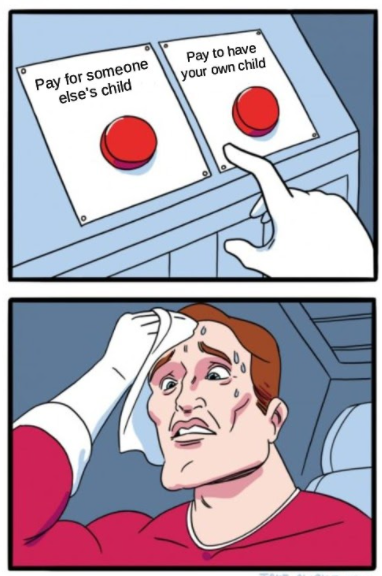
TL;DR: This individual was driving home from work on a 4-lane road with a 45 mph speed limit that has a divider in between the lanes. A group of teenagers were standing on the divider waiting to cross once the traffic lights changed. The traffic lights did not change and a teenager decided to walk right in front of the car. The driver slammed on the breaks but could not swerve due to other cars driving right next to her. She ended up hitting the teenager and he ended up with injuries but survived. The teenager knowingly walked in front of oncoming traffic without a change in traffic lights and ended up getting it. Even if the driver could have stopped in time, the other car over probably would have hit the teenager. The driver was sued by the teenagers parents and ended up being found not at fault every time. The parents of the teenager think the driver should be paying most if not all of the medical bills of the teenager, even though it was 100% the teenagers fault. The driver believes she has a moral obligation to pay at least some of the medical bills. The driver and her husband are already planning on having a child via IVF, which is expensive as it is, but the husband has a moral conflict as to whether or not they should pay the bills to the injured teenager or have their own child (via IVF). The individual is wondering whether or not she is the a-hole for not paying for the injured teenagers medical bills. 

Mozi represents objective consequentialism and is therefore only concerned with the resulting outcome. Here, Mozi would most likely tend to side with the driver as the events transpired and the consequential results do not promote moral goodness. To accomplish this, actions must promote enriching the poor, contributing to the population, or establishing order. This specific situation offers a unique perspective as the events conflict against each other in Mozi’s criteria analysis. “Looks at consequences of either action: not helping and helping. Do these consequences align with promoting enrichment of poor, increasing population, and making order,” (80). By knowingly defying the law and refusing to cross at the properly designated locations, this individual is incorrectly assessing the situation and not accounting for others in considering the consequential ramifications for their actions. After the damage has been done, it is unrealistic to expect the driver to pay for another’s mistake, although, according to Mozi, some consideration should first be examined. While paying the pedestrian’s family would satisfy Mozi’s first criteria of enriching the poor, in this specific situation where the pedestrian remains completely at fault, answering this question still remains difficult today. Assessing the second criteria does not appear to clarify the answer further as ensuring the driver pays reparations to the pedestrian would be indirectly withholding funds the driver’s family planned for their first child.


“If people regarded other people’s families in the same way that they regarded their own, who then would incite their own family to attack that of another? For one would do for others as one would do for oneself”

Mozi 69

Here, a quick glance at a role-reversal scenario illustrates how indirectly taking money planned for the birth of a child is most likely interpreted by each party in the same manner, it is unreasonable to expect. The last criteria is the tie-breaking vote; by paying the reparations, the driver may accumulate negative affect and emotions towards having to pay large sums of money to someone who foolishly made a very dangerous decision that put both themselves and the driver in harm’s way. In this way, the driver’s family loses money, meaning they potentially may not be able to afford the procedure to give them a child, or must wait again to save enough to complete the procedure later on only increasing the likelihood of complications with the woman’s increasing age.

In addition, while the pedestrian’s family shouldn’t be punished for his mistakes, having the innocent driver pay prevents any learning to occur. While unjust, the decision the pedestrian made should be paid by that individual alone yet, seeing as medical expenses divert to the family, while unfortunate, owning up to the consequences of parenting and decision making should be kept to the side at fault. The animosity experienced by the pedestrian’s family is not comparable to the disorder caused by an innocent family having to sacrifice their hard-earned money to pay for the damage of a mistake made by a young adult.

Considering both situations where the driver does or does not pay in accordance with Mozi’s criteria does not give one concrete morally correct answer but does reason the better choice, all things considered. If the driver does not pay reparations, according to the criteria set by Mozi, it would be most morally logical that the pedestrian’s family pay alone, ensuring the pedestrian heals properly, with some financial burden as the consequence for their actions while the driver’s family can continue to plan to have the procedure done and start a family, effectively contributing to the population and increasing order in society.