Kantian Ethicists Subscription to the Golden Rule: A Quick and Simple Guide to the Collective Deontology

Golden Rule:
Treat others the way you want to be treated.

Prompt 1: My boyfriend wants to follow me and live with me after he graduates from his university, but I’m not sure if I want to be responsible for changing his career trajectory and have him move to a new town. But at the same time I still want to be with him.

In this scenario, we have a girlfriend and boyfriend who are very close, as they should be in a relationship. The boyfriend wants to stay with the girlfriend after he finishes college. The girlfriend however does not feel comfortable changing her boyfriend’s life and career to stay in the relationship. However she still likes being with him and wants to stay in the relationship. Relationships are a huge factor in our life, and we believe that in order to gain a full philosophical role that adheres to manners, we believe that she should stay with her boyfriend.

Although Buss and Olberding differ for their reasons behind manners’ role within a given moral framework, they can both agree that an important component of etiquette is establishing and maintaining the appearance. For Buss, the appearance is meant to serve as a selfless act for which true acknowledgement of the other takes place. Specifically, acknowledging the other’s intrinsic value, or dignity (Buss 796). Regardless of how an individual feels about another, they are rational beings and thus deserving of respect. And by appearing respectful in behaving with manners, we thereby directly express the respect we have for others.

With that in mind, the partner of the boyfriend has a relatively straightforward approach to their dilemma. In order to show the boyfriend respect, Buss argues that the partner needs to be agreeable. In this scenario, that would endorse a more passive and accepting approach from the partner. The fact that the partner wants to stay with the boyfriend makes the decision quite simple. The partner should listen and ultimately agree with the boyfriend’s plea to stay together because his value would be acknowledged as a result. Moreover, the relationship may also strengthen because the boyfriend would feel recognized and more importantly, entrusted. Therefore, I would recommend the partner prioritizes the relationship and stays with the boyfriend.

Prompt 2: I have a friend who is part of the LDS church and does not believe in gay marriage (I definitely do). We have been friends since we were in kindergarten, and of course at that time we didn’t think about these differences. Should I not be friends with him since he doesn’t value LGBTQ+ rights?

Our society is one of manners and courtesy. This means that in essence, we have a code of rules that we have set in society. On this prompt, we see two friends with differing views on gay marriage and LGBTQ+ rights. One of the friends is a member of the LDS church, an organization known for their lack of respect for the LGBTQ+ community. Should they continue to be friends even though they can’t agree on this political issue? We believe that in this situation, respect is paramount. Thus, the individual belonging to the LDS church should have a conversation with their friend about the issue. Regardless of whether they decide to end the relationship, we believe both individuals should be treated with respect in the process.

One of the most critical components of manners – otherwise known as etiquette or courtesy – is how an individual presents themselves. A follower of Kantian moral philosophy, Buss believes that every rational being, humans included, are worthy of respect and should be treated as such through the act of manners. Manners, Buss believes, are a matter of good morals; to interact with another individual without proper manners is to act immorally. As a result, our response to the matter of friendship with a member of the LDS church is fairly straightforward. If you would like to act with good manners, the suggested course of action is to remain friends with this individual for ending the friendship abruptly would be considered rude, especially if the individual asking this question has never conversed with their friend about the topic of valuing LGBTQ+ rights.

This being said, we make this suggestion only on the assumption that the individual asking this question would not be directly harmed by continuing this friendship. This is to say, if the individual is a member of the LGBTQ+ community, of which this possible friend does not value, then our advice would then be for the individual to end the friendship but to explain to their former friend why the friendship is ending. The reality is that respect and manners are a two-way street; you can treat someone with good manners all you want but if the other individual is not doing the same for you (not treating you with respect as a member of the LGBTQ+ community), then you are bringing harm unto yourself by letting yourself be treated with less respect than you deserve. You owe it to yourself to ask to be treated with respect, even if that means ending the friendship; we only ask that you still treat your former friend with respect by letting them know why you’re choosing to let go of what was once a good relationship.

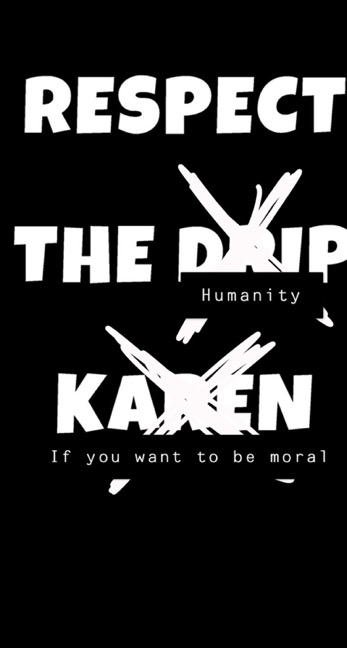
We based our moral advice here on one primary notion: that each and every human being has inherent value because they are human. Thus, everyone deserves and should be treated with respect. Even in scenarios where one may need to be blunt or even confrontational with a friend or colleague, one must always keep respect in mind; it should be at the forefront of every interaction, no matter the circumstances. This is not to say, however, that one should just be a pushover – one should also expect to be respected by others. It is moral to treat others with respect, but it is not immoral to expect that same respect back. It is also worth noting that respect, manners, and etiquette can still be maintained during arguments, debates, and confrontations. This principle is how we decided upon what moral advice to give to the people in the two situations above – as long as you are making decisions with the humanity and value of other people in mind (as well as showing this through your actions) you will almost certainly be behaving in a way that is moral.


Kant Ethics: Testing the Universalizability of Mundane Actions

Are individuals justified in wishing death upon Donald Trump?

Should we wish death upon a sitting president, and is someone justified to do so. The maxim in this is “I will wish death upon someone who is morally despicable to achieve personal gratification. Thus the categorical imperative is the moral obligation that you get when you follow that maxim. Does Trump’s despicable nature justify those thoughts and would Kant believe such a thought to create an impossible society?

The purpose of such thought is primarily to prevent violent action by providing some level of personal gratification. Therefore, this is the maxim for this particular prompt: Everyone who wishes death upon someone who is morally despicable achieves personal gratification. To test its universalizability, we have to argue whether the subsequent law of nature would produce a contradiction. To reach that conclusion, our group discussed the universalizability of the following statement: Everyone who wishes death upon someone who is morally despicable achieves personal gratification. In this specific case, a wish does not constitute a physical action. Wishing things is simply the act of thinking, which by all accounts, is something everyone can do. Moreover, one individual’s thought, if kept to themselves, does not cancel the ability for another individual to think. Therefore, the act of thinking does not produce any contradictions, which according to Kant, confirms that a society is possible to exist under this maxim. This maxim is morally permissible and does not violate the categorical imperative. With this in mind, individuals are justified in wishes directed toward morally despicable individuals.

I have strong romantic and sexual feelings for one of my previous teachers, whom I am very close with, have known for years, and deeply care about. I am of age and she has never made any advancements towards me, but I have this feeling that the bond we have is deeper than platonic. To be honest, I’m not sure if the bond is real or if I’m just delusional. I feel as though I’m betraying and taking advantage of her by thinking of her like this, but the feelings do not go away. I’m worried this will ruin our relationship if I tell her, so I know it’s best to ignore it yet still find it impossible. What are your thoughts?

The purpose of confessing feelings to an authority figure is to achieve full honesty and transparency. The law of nature connected to this maxim is that everyone who expresses romantic feeling will achieve full honesty and transparency. The question of whether this maxim would force a contradiction will be examined in the following paragraph.

Before we advise this individual, we’d like to make a note that, to make our Kantian analysis, we are giving this individual the benefit of the doubt that they are treating their former teacher as both a means and an end. Moving forward, we have identified the maxim of this question as being, I will tell my former teacher how I feel about them to achieve total honesty and transparency. We have also identified the corresponding law of nature, which goes, Everyone who expresses romantic feelings to an authoritative figure achieves total honesty and transparency. Now comes the big question: are these statements universally true? The answer is yes. We believe that both statements will result in zero contradictions for the immediate result (with regard to the purpose). If anything, the only contradictions that might exist are in the side effects, but Kant has emphasized that his test of universalizability does not consider effects beyond that which is the intended purpose.

Given that the maxim has been deemed universal, we can confidently suggest the individual that, should they decide to tell their former teacher, they will not have done anything that is morally wrong or unjust. We emphasize that the individual is not morally obligatory to confess to their former teacher, only that it is simple permissible.

The Permissive Nature of the Categorical Imperative

Our moral advice here stems from the fact that, in accordance with Kantian morality, many actions are indeed permissible (and moral). This is because whether or not an action is permissible hinges on the maxim itself and its universalizability, rather than the consequences of that action. This is to say that if the maxim (or the framing of the action, i.e. “I will do ‘x’ in order to ‘y’) is found to be universalizable (resulting in no contradictions at all) according to sound logical reasoning, then the action is entirely permissible and moral. 

For the first prompt, our conclusion that wishing death upon a sitting president is justified (or at least a permissible thing to do) was reached by following this reasoning process. Even if someone were to disagree with this conclusion, we found it to be universalizable under Kantian morality because it does not result in a contradiction.

This same line of reasoning holds true for the second situation as well; no contradiction is created by one willing this action (being upfront with romantic feelings for a former teacher) to be universalized. Again, one might stand in stark disagreement with this action, but because it does not strictly result in a contradiction given the maxim that we have established, it is entirely permissible. 

To reiterate, the most important aspect to note in understanding our Kantian advice for these two situations is that Kant’s philosophy has nothing to do with the consequences of actions, but rather their universalizability.

The Mengzi Dilemma: Where Should Our Priorities Be?

Here, we have two prompts that both address the ethical standard question in some capacity. The first prompt describes the concern an individual has with superimposing their career desires and aspirations on their boyfriend. I suppose this individual is experiencing a sense of guilt for compromising their boyfriend’s autonomy. The individual may also be concerned for future stability. The boyfriend’s priority is being with the individual, but it may cost him a focused and esteemed career path. The boyfriend may be content with following this individual because he does not have a clear career path in mind.

I believe Mengzi would lack sympathy for the boyfriend and challenge the partner to help the boyfriend self-realize his irrational decision-making. Mengzi believes that everyone has the potential, innate tendencies that “tend toward goodness” (6A2). However, the environmental conditions that an individual exists in could influence their trajectory. Like the barren mountain, which lacked the necessary nourishment to actualize its nature, the boyfriend must insert himself under the material conditions necessary for his flourishment (6A8). Moreover, the individual must recognize that their selfish desire to stay close to the boyfriend may prevent his ability to self-cultivate. This individual must emphasize to the boyfriend that his spontaneous tendencies are misled by the “office of the ears and eyes” (6A15). Mengzi would suggest that the boyfriend listens to his heart, for “the office of the heart is to reflect,” and if he reflects, “then he will get virtue” (6A15). With reflection, encouraged by the boyfriends partner, he may find reconciliation with prioritizing his conditional needs.

The second prompt addresses an interesting ethical standard dilemma between prioritizing others and prioritizing the self. Similar to the previous prompt, this individual, who is considering not physically participating in the Black Lives Matter protest, is potentially denying herself an opportunity for self-cultivation. With that being said, I believe Mengzi would recommend this individual to show a level of benevolence and awareness toward her grandparents. As much as the BLM protest is an opportunity for self-cultivation and self-discovery, empathizing with the grandparents is an opportunity toward making her virtues independent of self-interest. Because of this, I believe Mengzi would argue that caring for the grandparents would have more impactful implications on the path toward goodness. “Treat your elders as elders, and extend it to the elders of others; treat your young ones as young ones, and extend it to the young ones of others; then you can turn the whole world in the palm of your hand” (1A7).

Mengzi would have trouble with both these scenarios given that they each sacrifice opportunities for cultivating specific innate virtues. Ultimately, Mengzi would argue against any feelings of cognitive dissonance or uncertainty. In the case of the clingy boyfriend scenario, the boyfriend’s partner has feelings of uncertainty toward allowing the boyfriend to sacrifice self-growth for their physical partnership. This concern is a result of self-reflection, which is “the office of the heart” (6A15). Mengzi would admit that an internally disharmonious individual is acting in accordance with their humanity, for “there is no human who does not tend toward goodness” (6A2). However, it is exactly this internal struggle that should alarm an individual of their decision-making. The same could be said for the BLM scenario. Mengzi would suggest that the concern she has for her grandparents suggests that she reflected, and is trending toward goodness. The next important step, however, is to trust these feelings of uncertainty to lead the individual toward an unraveling of their innate virtues.